ITEM NO: [08-CER-DLFT-S]
DESCRIPTION: A rare 17th-century tin-glazed earthenware tile of Dutch origin. Measuring 12.8 x 12.8 cm, this unit features a hand-painted Delft Blue depiction of a bifurcated sea creature.
CONDITION: Relic/Very Good. Remarkable structural integrity for a 350-year-old ceramic. Minor surface blemishes and "edge nibbles" are present, consistent with three centuries of domestic installation and subsequent extraction. The glaze remains high-gloss, effectively trapping the depicted entity in a stable state.
SITE MANAGER’S NOTES: While the auction house identifies this as a "whale," the Office of Continuity has reclassified it as a Pre-Collapse Biological Record. This tile serves as the only known visual evidence of a creature that has since slipped entirely from our primary reality. Note the unnatural fork in the tail and the way the water appears to bend around the entity's midsection—this is indicative of a "flicker" event occurring at the moment of the artist’s observation in the late 1600s.
This tile was recovered from a professional seller in Trieste and is believed to have been part of a larger kitchen installation that vanished in 1988, leaving only this single unit behind. It remains unnaturally cool to the touch, even in direct sunlight. Do not install near modern plumbing; the creature has been known to "agitate" the water pressure in the Benoni Site's main bathroom.
ITEM NO: [08-CER-DLFT-S]
DESCRIPTION: A rare 17th-century tin-glazed earthenware tile of Dutch origin. Measuring 12.8 x 12.8 cm, this unit features a hand-painted Delft Blue depiction of a bifurcated sea creature.
CONDITION: Relic/Very Good. Remarkable structural integrity for a 350-year-old ceramic. Minor surface blemishes and "edge nibbles" are present, consistent with three centuries of domestic installation and subsequent extraction. The glaze remains high-gloss, effectively trapping the depicted entity in a stable state.
SITE MANAGER’S NOTES: While the auction house identifies this as a "whale," the Office of Continuity has reclassified it as a Pre-Collapse Biological Record. This tile serves as the only known visual evidence of a creature that has since slipped entirely from our primary reality. Note the unnatural fork in the tail and the way the water appears to bend around the entity's midsection—this is indicative of a "flicker" event occurring at the moment of the artist’s observation in the late 1600s.
This tile was recovered from a professional seller in Trieste and is believed to have been part of a larger kitchen installation that vanished in 1988, leaving only this single unit behind. It remains unnaturally cool to the touch, even in direct sunlight. Do not install near modern plumbing; the creature has been known to "agitate" the water pressure in the Benoni Site's main bathroom.

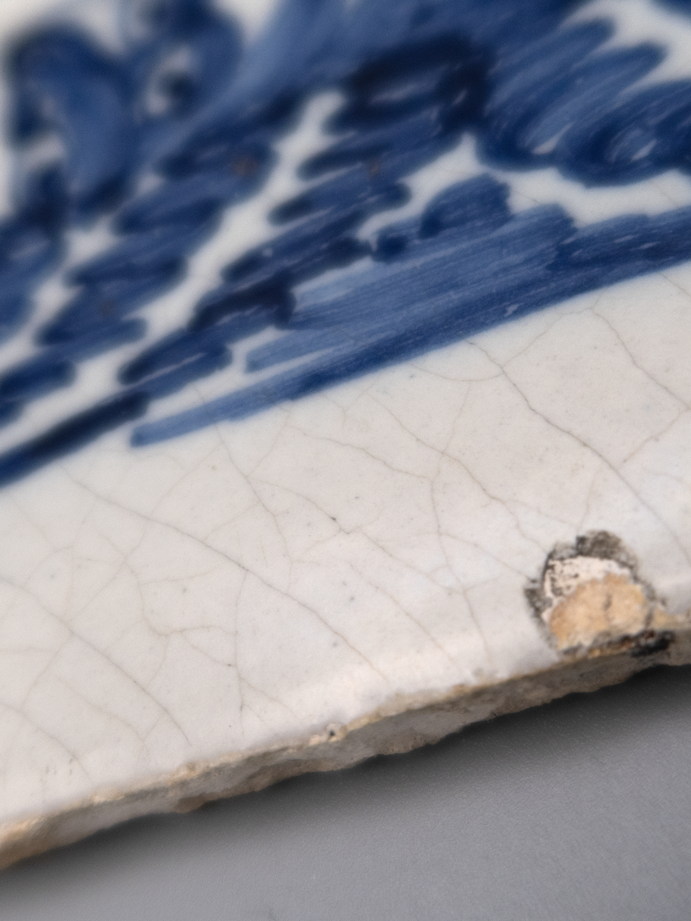 Image 1 of 6
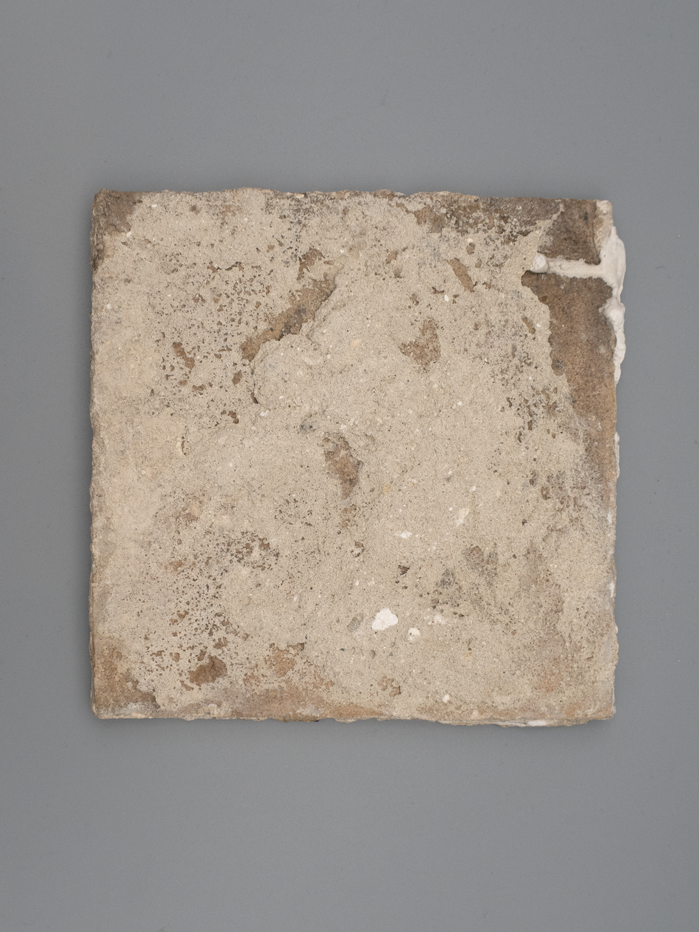 Image 2 of 6
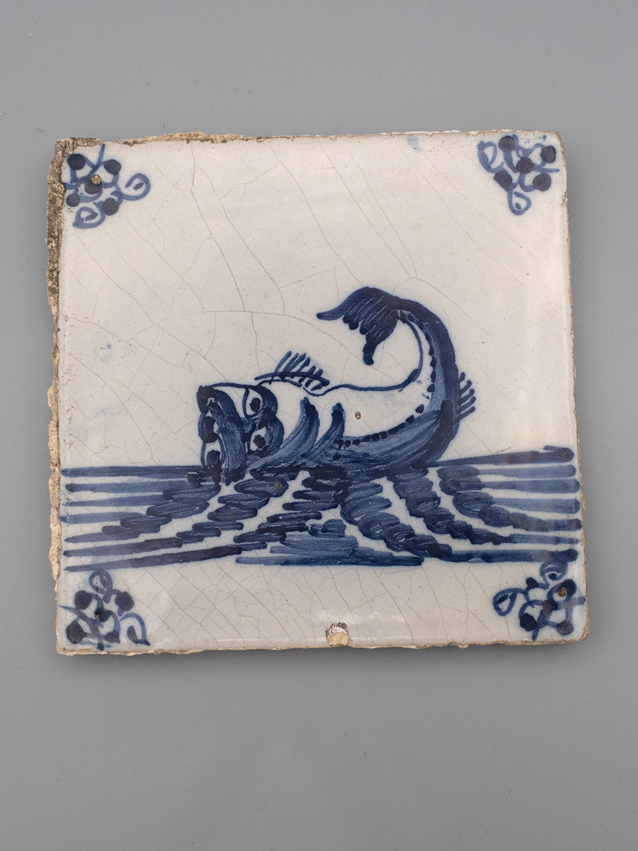 Image 3 of 6
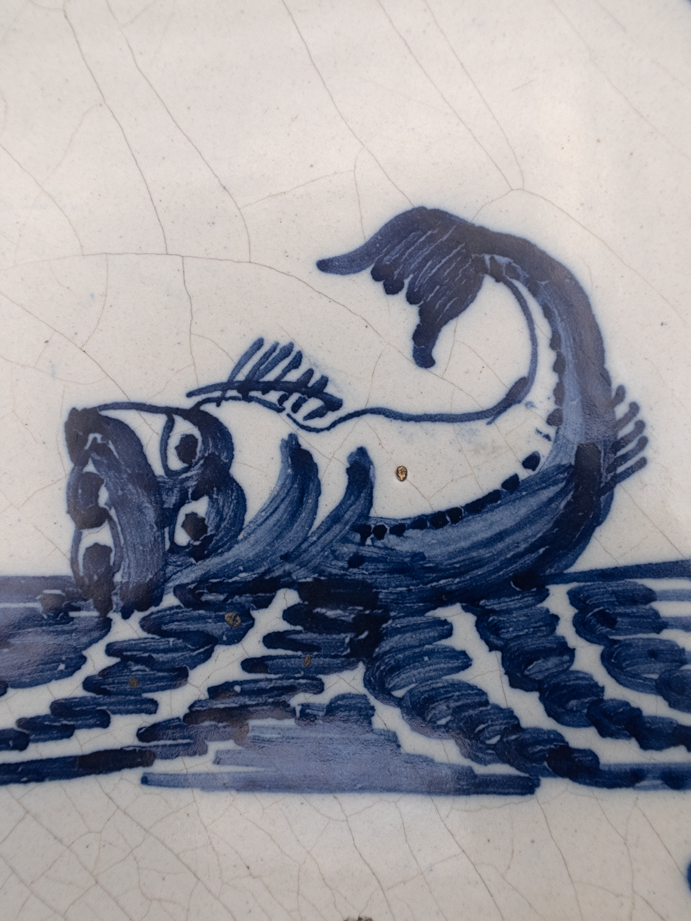 Image 4 of 6
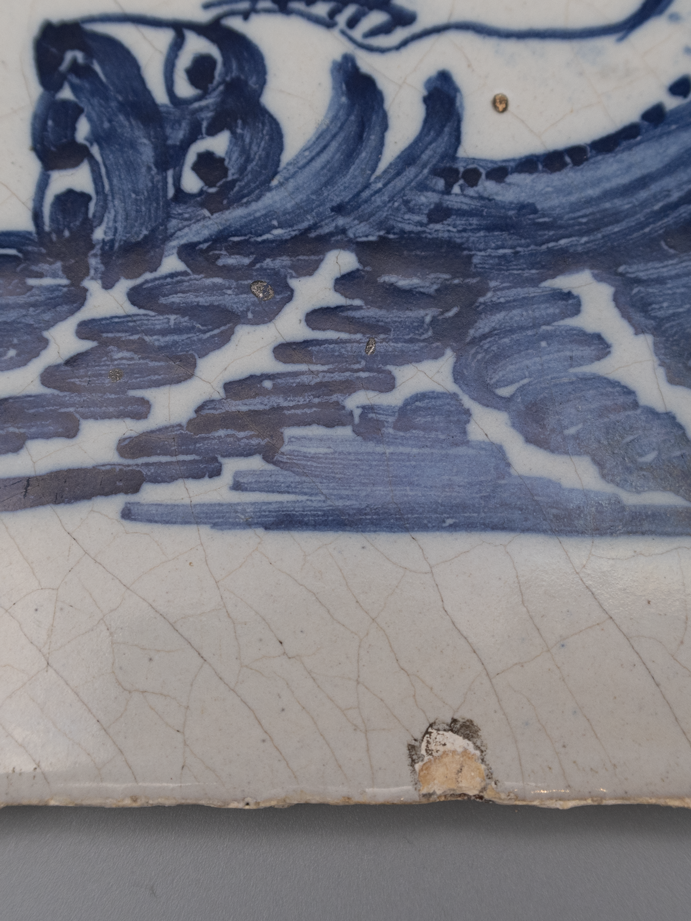 Image 5 of 6
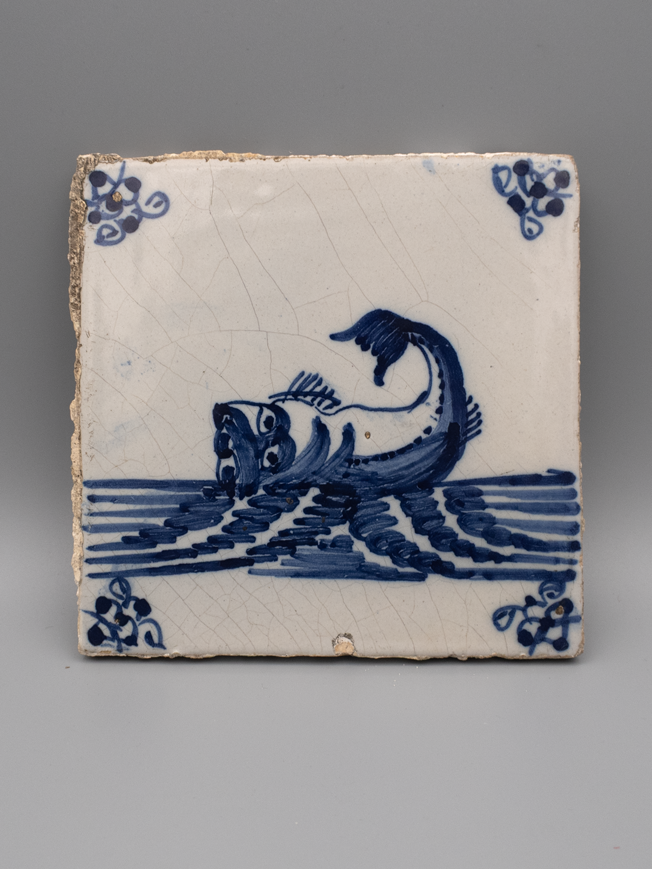 Image 6 of 6